

Understanding Rectilinear Biphasic™ Waveform (RBW) Technology
When an Automated External Defibrillator (AED) delivers a shock during sudden cardiac arrest, the electrical pulse is not simply a burst of electricity. The waveform, including its shape, direction, current, duration and energy, plays an important role in how the shock is delivered to the heart.
One waveform design used in modern defibrillation is the Rectilinear Biphasic Waveform. The technology is used in ZOLL AEDs, including the ZOLL AED Plus, and is designed to deliver a controlled electrical current across the heart during defibrillation.
What Is a Rectilinear Biphasic Waveform?

The term can be broken down into two parts: rectilinear and biphasic.
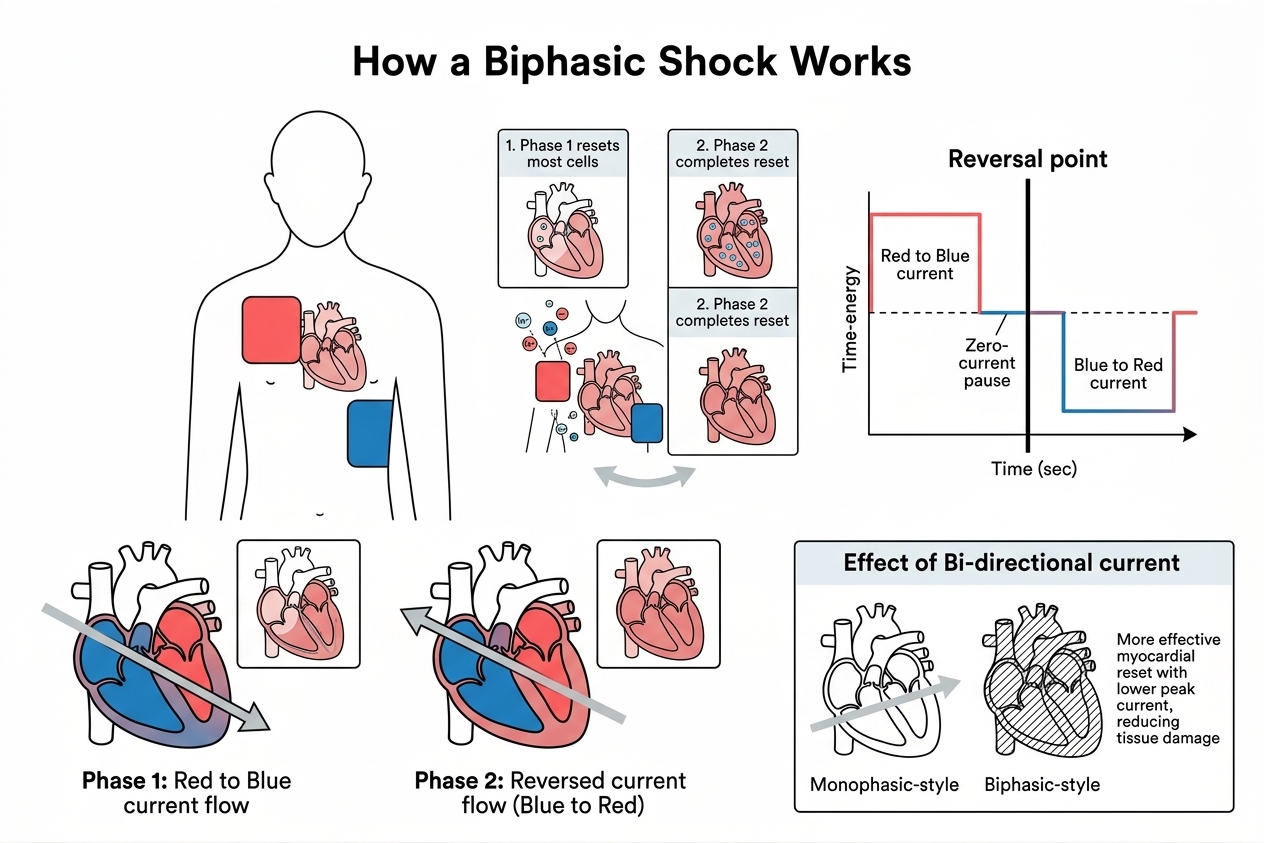
“Biphasic” refers to the two phases of the electrical pulse. Instead of sending current in only one direction, as with traditional monophasic defibrillation, a biphasic shock changes direction during the same defibrillation pulse.
“Rectilinear” describes the shape and control of the electrical waveform. In a rectilinear biphasic waveform, the current is delivered in a controlled pattern rather than following the gradually changing shape associated with some other waveform designs.
The result is a defibrillation pulse consisting of a first phase followed by a second phase in the opposite direction. ZOLL’s published AED Plus specifications, for example, describe a first phase lasting 6 milliseconds followed by a second phase lasting 4 milliseconds, with a short interval between the two phases.
How Does a Biphasic Shock Work?
During defibrillation, an AED delivers an electrical current between two electrode pads placed on the patient’s chest. The current travels through the chest and heart.
A biphasic waveform divides the shock into two electrical phases.
The first phase sends current in one direction through the heart. The second phase reverses the direction of the current.
This change in direction is one of the defining characteristics of biphasic defibrillation. Different biphasic waveform designs can use different electrical shapes, timing and methods of controlling the current.
The amount of current delivered is affected by the electrical resistance, or impedance, encountered by the shock. Patient impedance can vary from person to person. For this reason, modern defibrillators use circuitry and control methods designed to manage the electrical characteristics of the shock according to the conditions encountered during delivery.
Current, Duration and Energy
Three terms are particularly important when discussing defibrillation technology: current, duration and energy.
Current, measured in amperes (A), describes the flow of electrical charge through the body.
Duration, measured in milliseconds (ms), describes how long the electrical pulse is delivered.
Energy, measured in joules (J), represents the electrical energy delivered by the defibrillator.
These factors are related, but they are not interchangeable. Looking only at the joule rating of an AED does not provide a complete picture of how its defibrillation shock is delivered.
For this reason, waveform design and current control are important considerations when evaluating defibrillation technology.

Why Is Waveform Design Important in AEDs?
Biphasic waveform technology has become widely used in modern external defibrillation. Research has evaluated different biphasic waveform designs, including rectilinear, biphasic truncated exponential and other forms. Clinical literature has found biphasic defibrillation to be an established approach, although evidence does not establish that one specific biphasic waveform design is universally superior to all others.
Waveform design matters because the defibrillator needs to deliver an electrical shock across the heart in a controlled manner.
The electrical characteristics of the patient also matter. Body size, chest structure and other factors can affect transthoracic impedance. A defibrillator’s waveform and internal circuitry therefore influence how the selected shock is actually delivered.
For ZOLL’s Rectilinear Biphasic Waveform technology, the company describes an approach that measures patient impedance and adjusts its internal defibrillation circuitry to help maintain controlled current during the shock.
Rectilinear Biphasic vs Other Biphasic Waveforms
Not all biphasic waveforms are the same.
Several waveform designs are used in clinical defibrillation. One commonly used design is the biphasic truncated exponential (BTE) waveform. Other designs include rectilinear and pulsed biphasic waveforms. They all use two phases, but their electrical shape, current profile, timing and method of controlling the shock can differ.
A simplified comparison looks like this:
| Waveform | Basic characteristic |
|---|---|
| Monophasic
|
Current flows in one direction |
| Biphasic
|
Current changes direction during the shock |
| Biphasic truncated exponential
|
A biphasic waveform in which the current decreases over each phase |
| Rectilinear biphasic
|
A biphasic waveform with a controlled, relatively rectangular current profile |
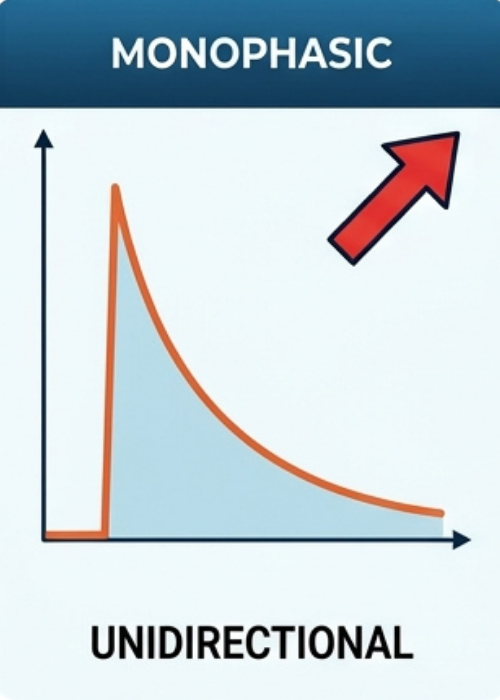
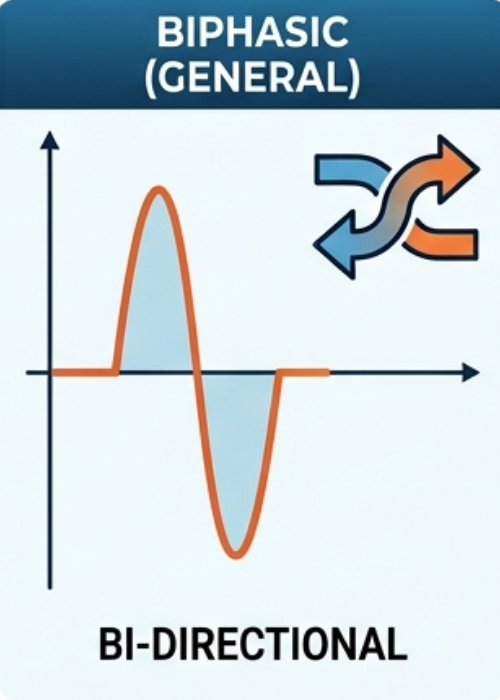
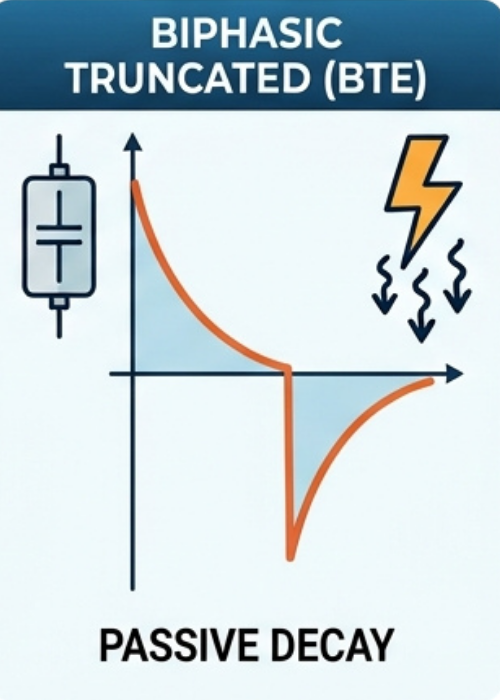
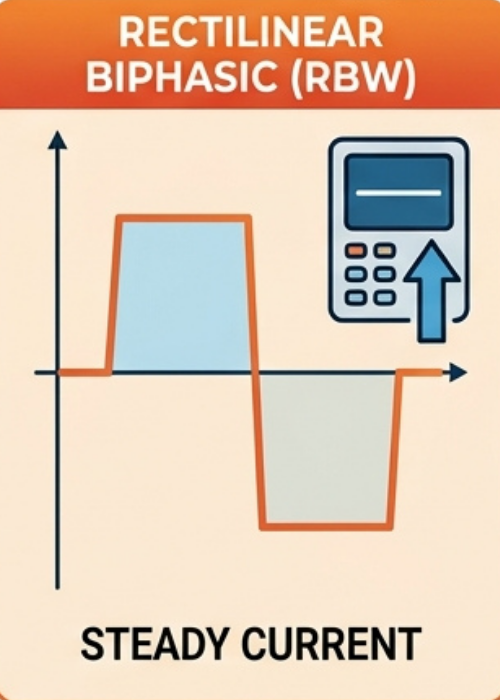
The distinction is important because the term “biphasic” describes the two-directional nature of the shock, while “rectilinear” describes a particular waveform design.
What Does This Mean for AED Users?
For a first aider or workplace responder, the technical waveform is not something they need to manually configure.
An AED analyses the patient’s heart rhythm and determines whether a shock is advised. Depending on the AED design, the device either delivers the shock automatically or instructs the rescuer to press the shock button.
The responder’s priority remains straightforward: recognise cardiac arrest, call for emergency medical assistance, begin CPR and use the AED as soon as it is available, following the device’s voice and visual instructions.
The waveform technology operates in the background. Its role is to determine how the electrical shock is generated and delivered once the AED identifies a shockable rhythm.
Key Takeaway
A Rectilinear Biphasic Waveform is a type of biphasic defibrillation waveform that delivers an electrical shock in two phases, with the current changing direction between them. The waveform’s shape, current, duration, energy and response to patient impedance all contribute to how the shock is delivered.
For workplace and public-access AED users, understanding the technical details is useful when evaluating equipment, but the AED is designed to handle the waveform and shock delivery automatically. The rescuer’s focus should remain on early CPR, prompt AED use and following the device’s instructions.