

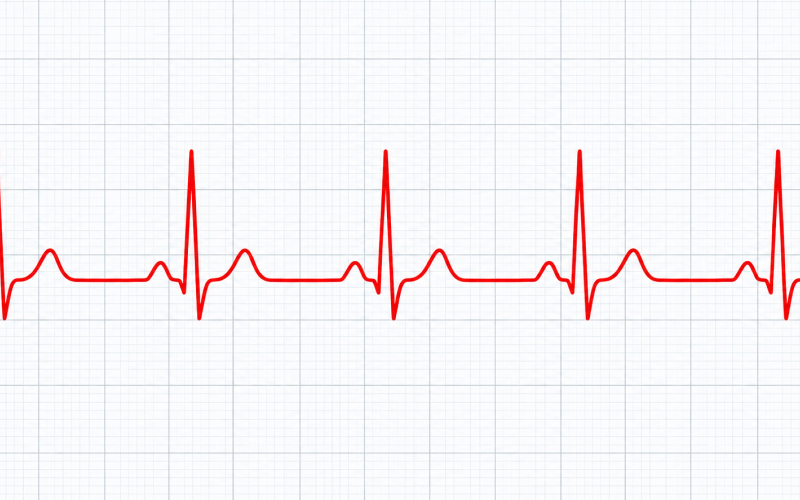
Pulseless Ventricular Tachycardia vs Ventricular Fibrillation: What Safety Teams Should Understand About AED Shockable Rhythms
Key Takeaways
- Pulseless ventricular tachycardia (pVT) and ventricular fibrillation (VF) are two life-threatening cardiac arrest rhythms that prevent effective blood circulation and may require immediate defibrillation.
- AEDs automatically analyse cardiac rhythms and advise a shock when indicated, so workplace responders do not need to distinguish between pVT and VF before using the device.
- Poor electrode contact and movement during analysis can interfere with an AED’s ability to assess the heart’s electrical activity accurately.
Pulseless ventricular tachycardia (pVT) and ventricular fibrillation (VF) are two life-threatening cardiac arrest rhythms that can prevent the heart from pumping blood effectively. Although both are considered shockable rhythms, they differ in how the heart’s electrical activity behaves.
Understanding pulseless ventricular tachycardia vs ventricular fibrillation helps workplace safety teams recognise why defibrillation may be necessary during cardiac arrest. In pVT, the ventricles produce rapid, relatively organised electrical signals without generating an effective pulse. In VF, electrical activity becomes chaotic, preventing coordinated ventricular contraction.
Defibrillation aims to interrupt a shockable rhythm so an effective heartbeat may resume, although success is not guaranteed. Workplace responders do not need to distinguish between pVT and VF by interpreting an electrocardiogram (ECG), as an automated external defibrillator (AED) assesses the detected rhythm and advises a shock when appropriate.
What Happens During pVT and VF?
Both pVT and VF involve abnormal electrical activity in the ventricles, the heart’s lower chambers that pump blood. At Ansac Technology, we provide AED inspection and servicing to help workplaces keep their devices ready for emergencies. We also offer routine inspections, preventive maintenance, functional testing, battery and electrode pad replacement, and troubleshooting.
pVT occurs when the ventricles beat so rapidly that they cannot pump blood effectively, resulting in cardiac arrest without a detectable pulse. Although the heart’s electrical activity remains relatively organised compared with ventricular fibrillation, it does not produce effective blood circulation.
In VF, electrical activity in the ventricles becomes chaotic and disorganised, causing the heart muscle to quiver rather than contract effectively. As a result, the heart can no longer maintain effective blood circulation, making immediate CPR and defibrillation, when indicated, essential.
Pulseless Ventricular Tachycardia vs Ventricular Fibrillation: What Is the Difference?
Understanding pulseless ventricular tachycardia vs ventricular fibrillation helps safety teams recognise why an AED may advise defibrillation for either rhythm. Although pVT and VF have different electrical patterns, both are classified as shockable cardiac arrest rhythms.
An AED analyses the person’s heart rhythm and determines whether a shock is advised. For workplace responders, recognising the difference between these conditions is less important than following the AED’s instructions and continuing CPR as prompted.
Classification During Cardiac Arrest
pVT is classified as shockable when ventricular tachycardia occurs without a pulse. Ventricular tachycardia can also occur with a pulse, requiring a different clinical approach.
VF is likewise classified as a shockable cardiac arrest rhythm because its disorganised electrical activity prevents effective circulation. Both conditions require immediate emergency intervention.
How the AED Responds
During AED rhythm analysis, the device evaluates the heart’s electrical activity to determine whether a shock is needed. Both pVT and VF are shockable cardiac arrest rhythms, although the AED will only recommend defibrillation when the detected electrical heart rhythm meets its programmed criteria. The device then provides an AED shock advisory, allowing workplace responders to follow its instructions without interpreting ECG patterns or identifying the specific cardiac rhythm.
What the Responder Needs to Recognise
Workplace responders should pay close attention to suspected cardiac arrest, call emergency medical services, perform CPR, apply the AED as soon as possible, and follow its prompts. We emphasise the importance of a prompt, coordinated emergency response because identifying the underlying cardiac rhythm should never delay assistance to someone who is unresponsive and not breathing normally.
What Safety Teams Should Understand
Comparing pulseless ventricular tachycardia vs ventricular fibrillation reinforces why workplace responders should focus on recognising cardiac arrest and using an AED promptly. In practice, workplace preparedness should ensure the device is accessible, functioning properly, and ready for use. AED training should also help responders recognise cardiac arrest, follow device instructions, and work together to provide timely assistance.
What Can Interfere With AED Rhythm Analysis?
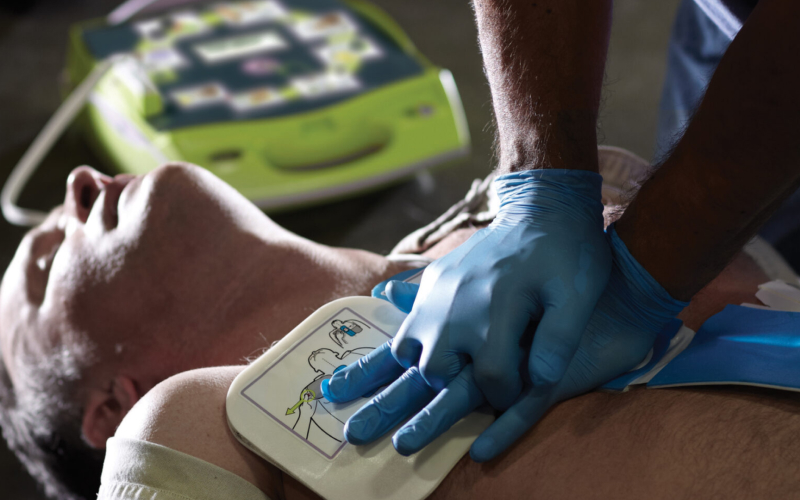
Although AEDs automatically assess the heart’s electrical activity, accurate rhythm analysis depends on the device receiving a sufficiently clear signal through its electrode pads. Proper electrode condition, routine equipment inspections, and responder familiarity with AED instructions all help reduce avoidable complications during a cardiac emergency.
Poor Electrode Contact
Electrode pads require appropriate contact with the person’s bare chest to detect cardiac electrical activity. Incorrect placement, poor adhesion, damaged electrodes, or deteriorated consumables may compromise signal quality.
From an equipment management perspective, pad condition deserves attention even when an AED has never been used. Unused pads can still expire or become unsuitable due to improper storage.
Movement During Analysis
Movement can interfere with the electrical signal being assessed. This is why AED instructions require responders to avoid touching the person during rhythm analysis. Workplace training should cover not only how to apply the pads but also when responders must stand clear and when CPR should resume.
What Do Shockable Rhythms Mean for Workplace AED Readiness?
Understanding shockable cardiac arrest rhythms reinforces the importance of having a functioning AED available during workplace emergencies. Since both pVT and VF may require defibrillation, the equipment must be accessible and ready to analyse cardiac rhythms when needed.
As a safety equipment provider, we understand that AED readiness involves more than simply installing a device. Safety teams should regularly check device status indicators for warnings, confirm that replacement electrode pads are compatible with the AED model, and monitor pad expiry dates and battery replacement requirements.
For workplaces managing multiple AED defibrillators, maintaining an equipment register can help track device locations, inspection records, and different maintenance schedules. This is especially useful when AED models use different replacement components or have manufacturer-recommended maintenance requirements.
AED Availability Is Different From AED Readiness
An AED may be installed in a workplace but not be ready for immediate use. Even when the device remains unused, electrode pads can expire, batteries may require replacement, and maintenance issues can develop over time.
As an AED supplier in Singapore, we recommend that organisations look beyond the device’s physical condition when assessing readiness. Routine status checks, consumable replacement tracking, and proper maintenance records help safety teams spot issues early and keep AEDs operational when needed.
AED Checks Should Cover the Whole Setup
AED readiness involves more than inspecting the main device. Safety teams should also assess the condition of electrode pads, battery status, storage cabinets, signage, and any emergency response accessories supplied with the unit. For example, an AED may pass its internal self-test, but expired electrode pads or an obstructed storage cabinet could still slow response time during an emergency.
A practical AED review should consider:
- Device status: Whether self-test indicators show that the AED is ready for use.
- Electrode pads: Whether packaging remains intact and replacement dates are current.
- Battery condition: Whether battery status and replacement requirements meet manufacturer guidance.
- Accessibility: Whether the AED, cabinet, and signage allow prompt retrieval.
- Maintenance records: Whether inspections, replacements, and servicing are documented.
Keep Your AED Ready for a Shockable Cardiac Arrest Rhythm
Understanding pulseless ventricular tachycardia vs ventricular fibrillation reinforces the importance of having a reliable AED as part of workplace emergency preparedness. While both conditions are shockable cardiac arrest rhythms, responders can rely on the AED to analyse the heart’s electrical activity and advise whether defibrillation is required.
Modern devices such as the ZOLL AED 3 feature automated self-testing and readiness indicators that support equipment monitoring. However, these functions do not replace routine inspections, timely consumable replacement, and maintenance in accordance with manufacturer guidelines.
A well-maintained AED is only one part of an effective emergency response plan. Organisations should also ensure employees know where devices are located, understand how to follow AED prompts, and can respond promptly when cardiac arrest is suspected.
About Ansac Technology
With over 25 years of experience serving organisations across Singapore and Malaysia, Ansac Technology provides safety, environmental, and measurement solutions supported by technical expertise and partnerships with leading global brands. Our AED solutions support our commitment to helping workplaces strengthen emergency preparedness through appropriate equipment selection and ongoing support.
Beyond supplying AEDs, we help organisations assess equipment needs, review device condition, plan consumable replacements, and arrange servicing to support long-term operational readiness.
Contact us to explore suitable AED solutions and maintenance support for your workplace.
Frequently Asked Questions
1. Can an AED detect both pulseless ventricular tachycardia and ventricular fibrillation?
Yes. AEDs are designed to analyse the heart’s electrical activity and identify shockable rhythms, including ventricular fibrillation (VF) and certain forms of pulseless ventricular tachycardia (pVT). When the detected rhythm meets the device’s shock criteria, it advises defibrillation. Workplace responders do not need to interpret the rhythm themselves.
2. Will an AED deliver a shock every time someone experiences cardiac arrest?
No. An AED only advises a shock when it detects a rhythm that meets its shockable criteria. Other cardiac arrest rhythms, such as asystole and pulseless electrical activity (PEA), do not respond to defibrillation. Responders should continue following the AED’s prompts, perform CPR as instructed, and await emergency medical assistance.
3. How often should workplace AEDs be checked?
Workplace AEDs should be inspected according to the manufacturer’s recommendations and the organisation’s maintenance procedures. Checks generally include device readiness indicators, electrode pad expiry dates, battery status, and equipment accessibility. Regular inspections help identify potential issues before an emergency, even when the AED has not been used.