

How Contact Sports Can Lead to Sudden Cardiac Arrest: Understanding the Risks and the Importance of Immediate Response
Contact sports are celebrated for their intensity, physical endurance and competitive spirit. From football and rugby to basketball, hockey and martial arts, athletes regularly experience physical collisions, sudden impacts and demanding levels of exertion.
While these activities offer significant health and fitness benefits, they also carry certain risks that are often overlooked. One of the most serious, although relatively rare, is sudden cardiac arrest (SCA).
Unlike common sports injuries involving muscles, bones or joints, sudden cardiac arrest is a life-threatening emergency that can occur without warning. Understanding how physical contact and intense exercise can affect the heart is essential for athletes, coaches, sporting organisations and spectators alike.
How Can Contact Sports Trigger Cardiac Arrest?
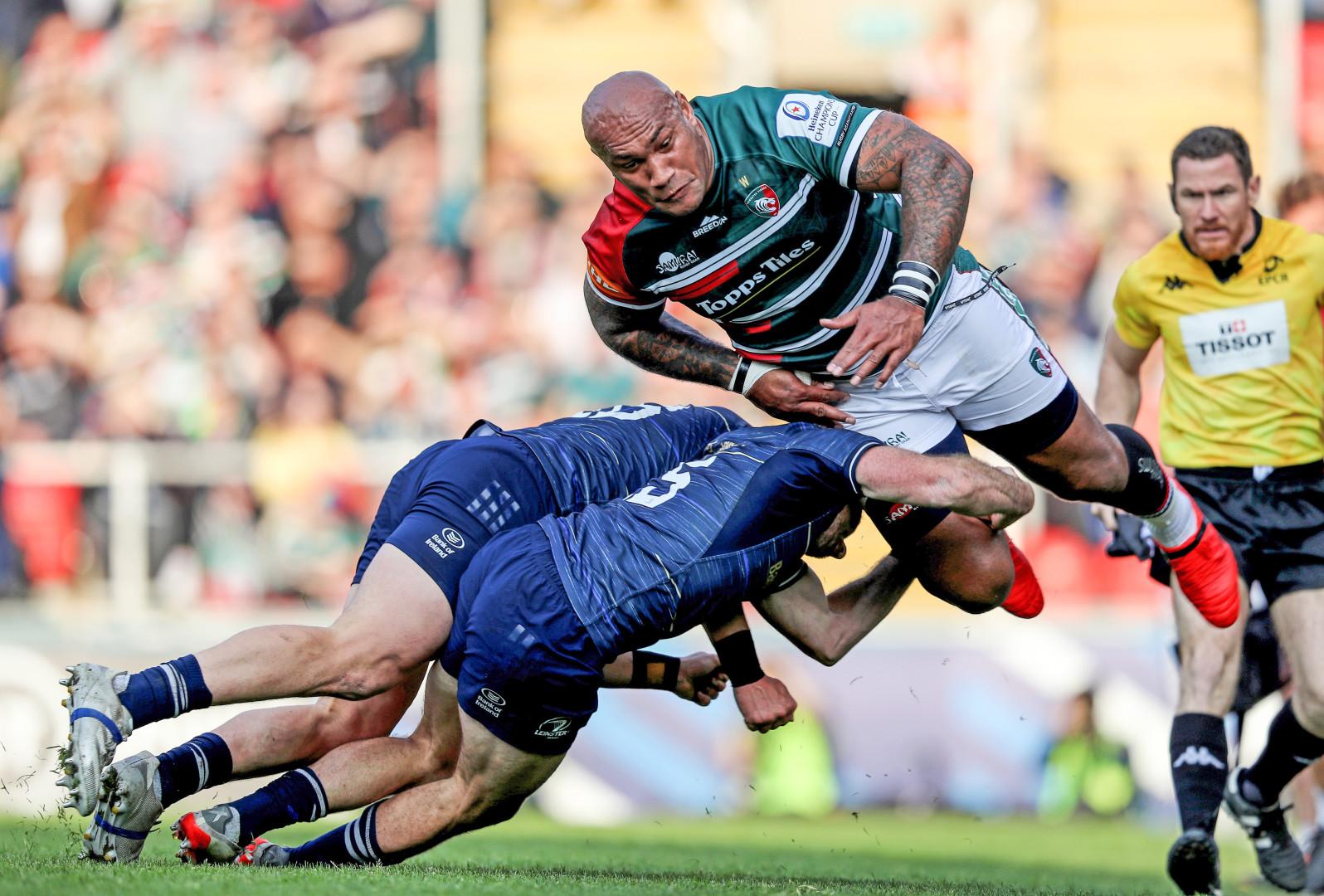
Image ref: https://www.worldsportsphotographyawards.com/
There are two important ways in which contact sports can contribute to sudden cardiac arrest: direct physical impact to the chest and intense physical exertion.
Direct Impact to the Chest: Commotio Cordis
One of the most unusual causes of sports-related cardiac arrest is a condition known as commotio cordis.
It occurs when a blunt impact strikes the chest at an extremely precise moment during the heart’s electrical cycle. Rather than physically damaging the heart muscle, the impact disrupts its normal electrical activity, potentially triggering ventricular fibrillation.
Ventricular fibrillation is a dangerous heart rhythm in which the heart quivers chaotically instead of pumping blood effectively. Without immediate treatment, the condition can rapidly lead to cardiac arrest and death.
This can happen following:
- A football striking an athlete directly in the chest.
- A collision involving another player’s knee, elbow or shoulder.
- A hockey puck or other sporting equipment hitting the chest.
- A forceful impact during rugby or other physical contact sports.
Although commotio cordis is extremely rare, it demonstrates that even an otherwise healthy athlete can experience cardiac arrest following a seemingly ordinary sporting collision.
Intense Physical Exertion and Underlying Heart Conditions
Another contributing factor is the physical demand placed on the cardiovascular system during competitive sports.
During intense exercise, the heart beats faster and pumps more blood to supply oxygen to working muscles. In individuals with previously undiagnosed heart conditions, this increased demand can trigger dangerous electrical disturbances.
Some underlying conditions associated with sudden cardiac arrest in athletes include:
- Hypertrophic Cardiomyopathy (HCM): An inherited condition where the heart muscle becomes abnormally thick, potentially disrupting its electrical activity.
- Congenital Coronary Artery Abnormalities: Abnormalities in the arteries supplying blood to the heart that may compromise blood flow during intense exercise.
- Inherited Electrical Disorders: Conditions that affect the heart’s electrical system and can trigger life-threatening arrhythmias.
- Myocarditis: Inflammation of the heart muscle, sometimes following an infection, which can increase the risk of abnormal heart rhythms.
In older athletes, underlying coronary artery disease is another important cause.
The concerning factor is that some of these conditions may remain undetected until a major physical event exposes the problem.
Why Can Sudden Cardiac Arrest Be Difficult to Recognise?
One of the biggest challenges with sports-related cardiac arrest is that its initial symptoms can be mistaken for an ordinary sporting injury.
An athlete who collapses following a collision may initially be assumed to have suffered a concussion, exhaustion or a serious physical injury.
However, sudden cardiac arrest requires an entirely different and immediate response.
Warning signs include:
- Sudden, unexpected collapse.
- Loss of consciousness or unresponsiveness.
- Absence of normal breathing or abnormal gasping.
- Seizure-like movements following collapse.
- No immediate recovery after an impact or collision.
Importantly, cardiac arrest does not always involve an obvious impact. An athlete may collapse during physical activity because of an underlying cardiac condition.
Any athlete who suddenly collapses and remains unresponsive should be treated as a potential cardiac arrest until proven otherwise.
Every Second Counts: The Importance of CPR and AEDs
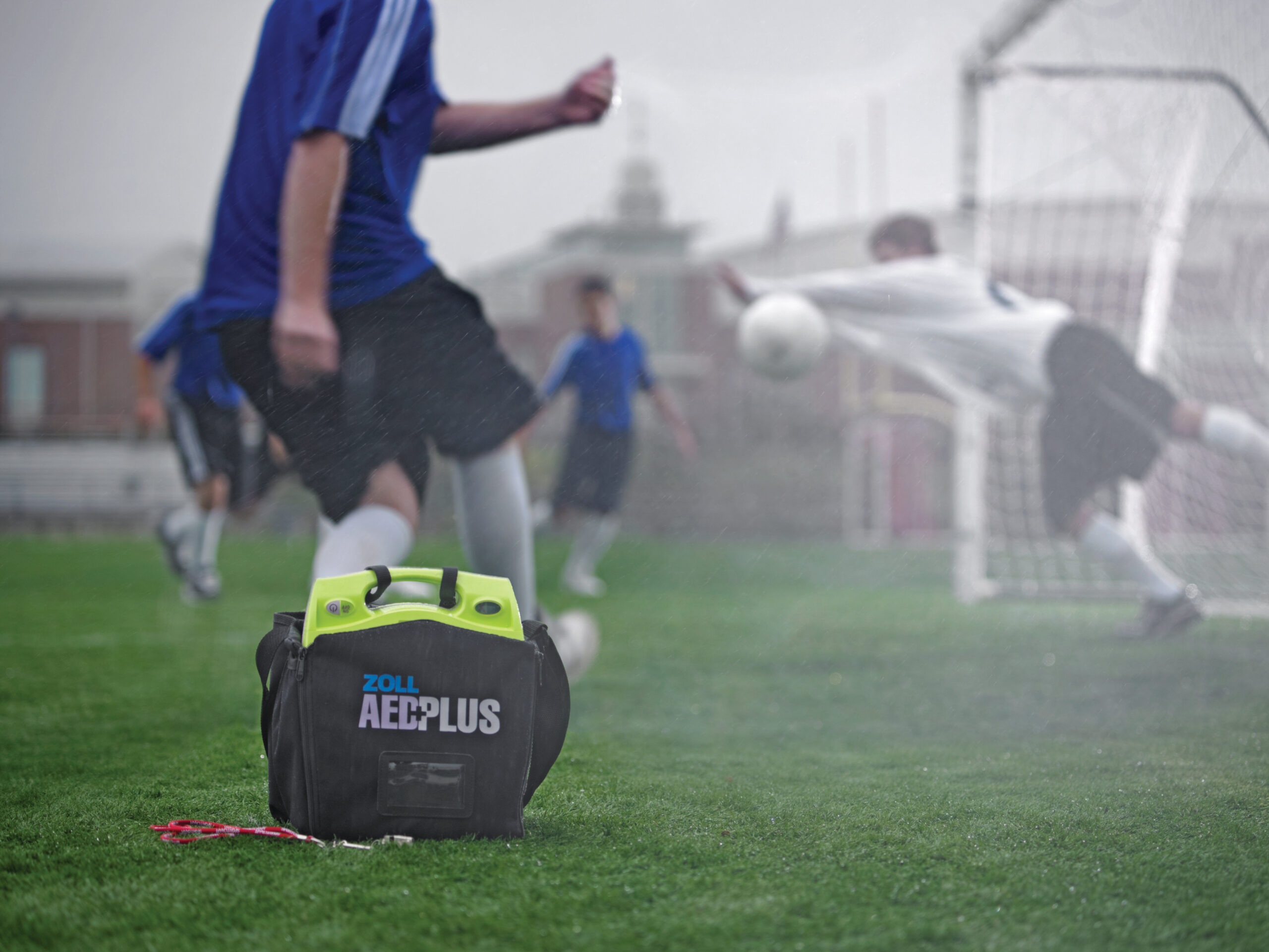
When sudden cardiac arrest occurs, the heart can no longer pump blood effectively to the brain and other vital organs.
Without immediate intervention, the chances of survival decrease rapidly.
Two critical interventions can significantly improve the chances of survival:
Cardiopulmonary Resuscitation (CPR)
CPR helps maintain blood circulation by manually compressing the chest. It provides a temporary supply of oxygenated blood to vital organs while emergency medical assistance is being arranged.
Automated External Defibrillator (AED)
An AED is a portable medical device designed to analyse the heart’s rhythm and determine whether an electric shock is required.
If a shockable rhythm, such as ventricular fibrillation, is detected, the AED delivers an electrical shock to help restore a normal heart rhythm.
For cardiac arrest caused by commotio cordis, immediate CPR and early defibrillation are particularly important.
The recommended emergency response is straightforward:
- Recognise: Check whether the collapsed athlete is responsive and breathing normally.
- Call: Activate emergency medical services immediately. In Singapore, call 995 for an ambulance.
- Perform CPR: Begin chest compressions immediately if the person is unresponsive and not breathing normally.
- Retrieve an AED: Use an AED as soon as possible and follow its voice and visual instructions.
- Continue: Continue CPR and follow the AED’s instructions until emergency medical professionals take over or the person shows signs of recovery.
Early intervention can make the difference between life and death.
How Can Sporting Organisations Reduce the Risk?
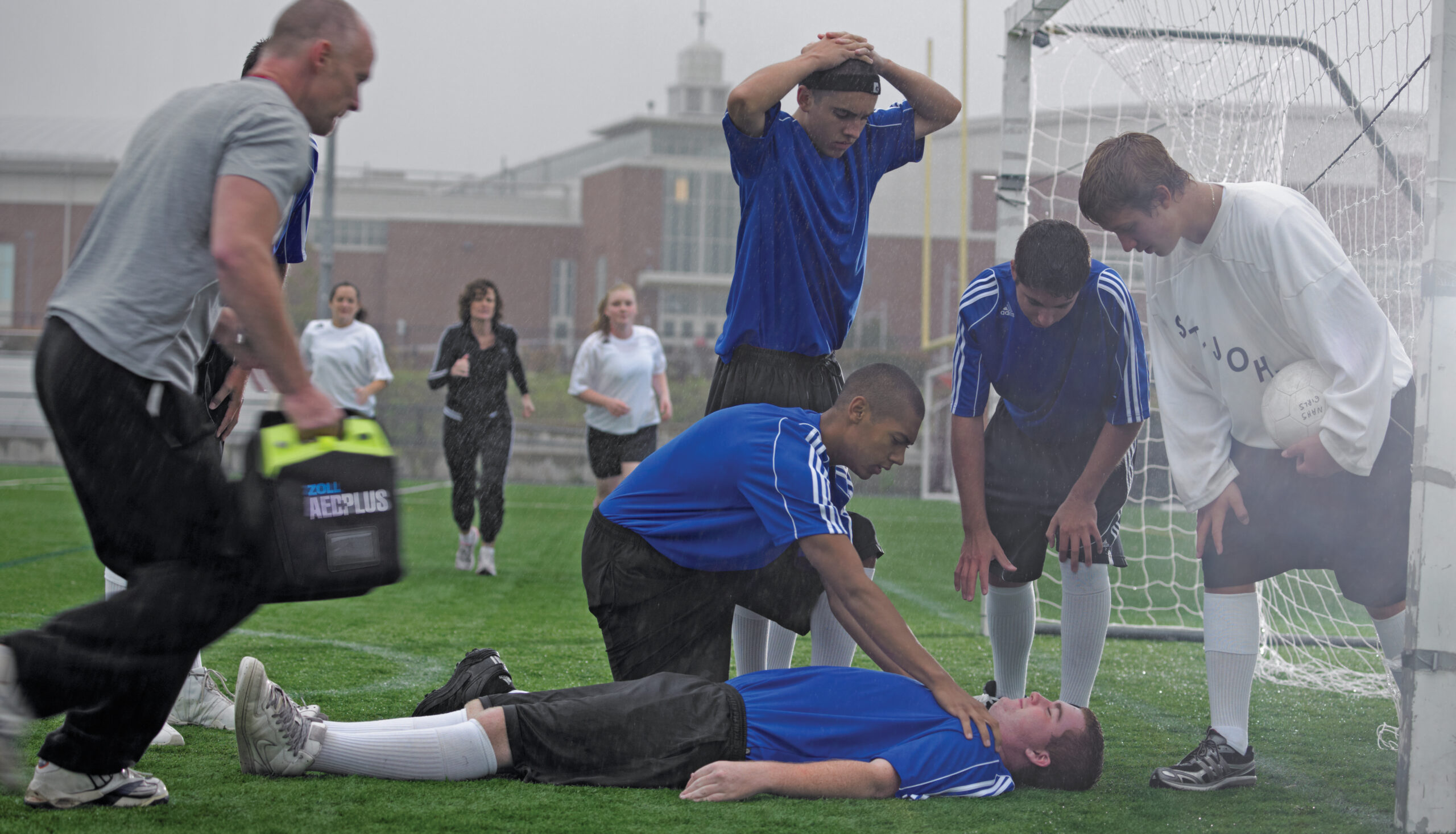
Although not every instance of sudden cardiac arrest can be prevented, sporting organisations can take proactive steps to improve athlete safety and emergency preparedness.
Consider implementing the following measures:
- Ensure AED Accessibility: Install AEDs at sporting venues, training facilities and other locations where physical activities take place.
- Provide CPR and AED Training: Equip coaches, trainers, players and support staff with the knowledge to respond to cardiac emergencies.
- Conduct Cardiac Health Assessments: Encourage appropriate pre-participation medical evaluations, particularly for competitive athletes.
- Establish Emergency Response Plans: Develop clear procedures outlining responsibilities, AED locations and emergency communication protocols.
- Maintain Emergency Equipment: Regularly inspect AEDs and ensure they are operational, accessible and ready for use.
Importantly, screening cannot identify every potential cardiac condition. Having a well-established emergency response plan remains essential, even in professionally managed sporting environments.
Preparedness Can Save Lives
Contact sports will always involve physical challenges, collisions and demanding levels of exertion. While sudden cardiac arrest remains an uncommon occurrence, its potentially devastating consequences should never be underestimated.
Whether caused by a direct impact to the chest or an underlying heart condition triggered by intense physical activity, cardiac arrest can happen even to athletes who appear healthy and physically fit.
The key is not simply to recognise the risks, but to be prepared to respond.