
Workplace Emergency Response Checklist: 7 Questions Every Safety Manager Should Ask
- Jun 26
- 6 min read

A workplace incident can escalate quickly when employees do not have access to the right equipment, information or procedures.
Whether you operate a manufacturing facility, warehouse, laboratory or maintenance workshop, emergency response preparedness should be reviewed regularly. Changes in processes, staff turnover, new equipment and evolving workplace risks can create gaps that are easy to overlook.
A practical way to assess your current readiness is to ask a few straightforward questions.
Use this checklist to identify areas that may need attention.
1. Are hazardous substances stored correctly?
In many workplaces, chemical storage starts off properly organised, but over time it tends to drift as new materials are introduced or storage areas become crowded. What matters most is whether hazardous substances are still being kept in a way that reflects their current risk.
This usually comes down to whether chemicals are clearly labelled so anyone handling them can immediately understand what they are dealing with. It also involves checking whether incompatible substances are still being stored together, especially when new materials are added without a full review of storage compatibility.
Designated storage areas should not feel temporary or improvised. They need to be consistently used, with clear boundaries so that hazardous materials do not end up in general workspaces. In some cases, access control also becomes important, particularly in shared facilities where multiple teams operate in the same area.

Safety cabinets are often used in these environments to bring structure back into chemical storage. They help keep materials separated, contained, and easier to manage during inspections.
2. Are spill control materials suitable for the risks on site?
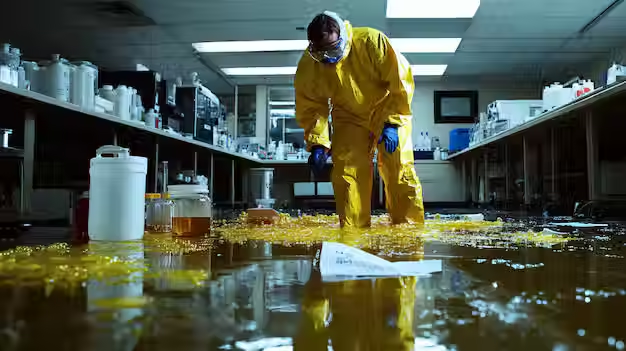
Spill response kits are often present in workplaces, but the real question is whether they match the types of materials actually being used on site. A common gap is assuming one general kit can handle all situations, when in reality different substances behave very differently once spilled.
For example, oil-based spills tend to spread in a very different way compared to chemical leaks or water-based solutions. If the absorbent materials are not designed for the specific type of spill, the response becomes slower and less effective, and the affected area can expand quickly.
It is also worth considering how close these spill kits are to higher-risk zones. In some facilities, they are stored too far from where incidents are most likely to happen, which leads to unnecessary delays when time matters.

Beyond placement, there is also the practical question of whether teams know what is actually inside the kits and how to use them under pressure. This is something that is often only discovered during an incident, when there is little time to check instructions.
3. Are eyewash stations and safety showers easy to access?
When a chemical exposure happens, the first few moments are critical. The ability for an employee to reach an eyewash station or safety shower without obstruction can make a significant difference in the outcome.
In some workplaces, these stations are installed but gradually become partially blocked by storage items, equipment, or temporary work setups. What looks acceptable during a routine walk-through may become a real problem during an emergency when visibility and movement are affected.
It is also important to consider whether employees can reach these stations quickly from different parts of the workspace. If someone has to move through multiple doors or navigate around machinery, the response time increases without anyone noticing during normal operations.
Signage plays a quiet but important role here as well. Clear, visible markers help ensure that even new staff or visitors can locate the station without hesitation.

Regular inspection is usually where these issues are caught, but it only works when the checks are done thoroughly rather than as a formality.
4. Is emergency response equipment inspected regularly?
Emergency equipment tends to be reliable when it is maintained consistently, but small issues can build up quietly over time. A blocked nozzle, expired absorbent material, or low water pressure in a safety shower may not be obvious until the equipment is actually needed.
This is why inspections need to go beyond ticking boxes. They should include physically checking that equipment is accessible, functional, and ready for use. In some workplaces, responsibility for inspections is clear, but the follow-through on corrective actions is less consistent.
A structured schedule helps, but what matters more is whether issues found during inspections are actually resolved and tracked. Without that follow-up, the inspection process loses its value.

Keeping simple records of what was checked, what was found, and what was corrected can help maintain accountability over time.
5. Do employees know what to do during an emergency?
Even with the right equipment in place, response can slow down if people are uncertain about what steps to take. This is especially true for newer employees or contractors who may not be fully familiar with the site layout.
In practice, clarity matters more than detail. Employees should be able to quickly identify who to alert, where to go, and what immediate actions to take if a spill or exposure occurs.
This is often where gaps appear. Procedures may exist in documents or manuals, but not everyone has internalised them enough to act without hesitation.

Short refresher sessions tend to be more effective than lengthy training sessions that are quickly forgotten. Practical walkthroughs of actual work areas also help reinforce where equipment is located and how to respond in real conditions.
6. Are emergency procedures reviewed after operational changes?
Workplaces rarely stay the same for long. New equipment is introduced, layouts are adjusted, and sometimes processes change without a full review of how these changes affect safety procedures.
Emergency response plans that were accurate a year ago may no longer reflect the current setup of the facility. This becomes more relevant when new chemicals are introduced or when storage areas are relocated.
A simple review after operational changes can help close these gaps early. It is often during these transitions that small oversights occur, especially when multiple changes happen at the same time.
Review your procedures whenever there are changes to:
 | Materials used on site: When new materials are introduced on site, especially chemicals or substances with different handling requirements, the existing emergency response steps may no longer fully apply. Storage methods, spill response materials, and even first aid actions might need to be adjusted based on the new risks involved. What worked for one type of material may not be suitable for another, particularly when reaction time matters. |
 | Equipment or machinery: Changes to equipment or machinery can also shift how risks appear in daily operations. A new machine may introduce heat, pressure, moving parts, or chemical by-products that were not part of the original safety planning. In some cases, the location of the equipment also affects how quickly an emergency can be contained or how easily workers can access response stations. |
 | Facility layout: Facility layout changes tend to create some of the most overlooked gaps. Moving storage areas, rearranging production lines, or adding temporary work zones can quietly affect access to emergency showers, eyewash stations, or spill kits. A route that used to be direct may suddenly involve obstacles or longer travel time, which can make a difference during an incident. |
 | Workforce responsibilities: Workforce responsibilities shifting is another area that often gets missed. When roles change or new staff are introduced, responsibilities during an emergency can become unclear. People may assume someone else will respond or that a particular task is handled by another team. Over time, this leads to hesitation during critical moments. Clear updates and brief refreshers help keep everyone aligned with what is expected of them in an emergency situation. |
The key is not to treat emergency procedures as static documents. They need to stay aligned with how the workplace actually operates.
7. Have you conducted an emergency response assessment recently?
Many organisations only revisit their emergency preparedness after an incident, when the review is driven by necessity rather than planning. A structured assessment done ahead of time gives a clearer picture of where improvements are needed.
This type of review usually covers how equipment is positioned, whether response times are realistic, and whether teams are confident in their roles during an incident. It also helps identify whether existing resources are still suitable for current risks.
In many cases, small adjustments make a meaningful difference, such as relocating equipment closer to high-risk zones or updating spill response materials based on newer chemicals being used.
Regular assessments help keep these improvements continuous rather than reactive.
Quick Self-Assessment Checklist
Use the checklist below to evaluate your current emergency response preparedness.
Question | Yes | No |
Hazardous substances are stored in designated areas. | ☐ | ☐ |
Spill control materials match the substances used on site. | ☐ | ☐ |
Eyewash stations and safety showers are accessible and clearly marked. | ☐ | ☐ |
Emergency response equipment is inspected regularly. | ☐ | ☐ |
Employees understand emergency response procedures. | ☐ | ☐ |
Procedures are reviewed after operational changes. | ☐ | ☐ |
Emergency response assessments are conducted periodically. | ☐ | ☐ |
If you answered "No" to any of these questions, it may be time to review your current emergency response measures.
At Ansac Technology, we support organisations across various industries with practical emergency safety solutions, including safety cabinets, spill absorbent control products, and emergency eyewash and shower systems.
Speak with our team to discuss your workplace requirements and identify solutions that align with your operational environment.



Comments