

How Lone Worker Monitoring Systems Improve Workplace Safety
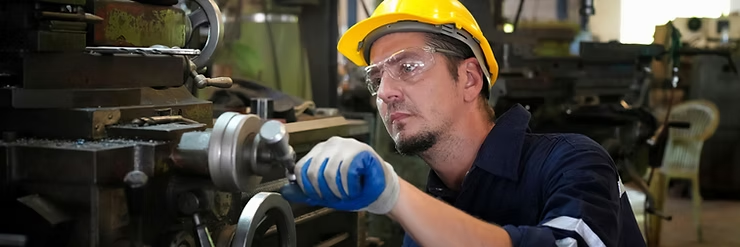
Lone workers often face a different kind of workplace risk. It is not always because their jobs are more dangerous, but because they are carrying out those jobs without anyone nearby to notice when something goes wrong. A simple fall, sudden illness, or unexpected incident can become far more serious when help is not immediately available.
That is why more businesses are paying closer attention to how lone workers are protected. It is no longer enough to assume workers will call for help if they need it. In many real-life situations, they may not be able to. This is where lone worker monitoring systems have become an important part of modern workplace safety.
What is a Lone Worker Monitoring System?
A lone worker monitoring system is designed to help businesses keep track of employees who work alone, whether they are out in the field, travelling between sites, working night shifts, or carrying out tasks in isolated areas.
Instead of relying only on manual check-in calls or hoping someone reports back at the end of the shift, these systems provide better visibility throughout the day. In simple terms, it gives both the worker and the employer added reassurance that someone is aware of their status and can respond quickly if needed.
For many companies, it is about closing the gap between working alone and working safely.
The Problem with Traditional Safety Methods
Many organisations still rely on traditional methods such as scheduled phone calls, supervisor check-ins, or paper logs. While these methods can still play a role, they often depend heavily on people remembering to follow through.
In reality, workers get busy, calls get missed, and incidents do not always happen at convenient times. A worker could run into trouble shortly after a check-in and remain unnoticed until the next scheduled contact. That gap in time is where the real risk often lies.
Traditional systems may look good on paper, but they do not always provide the speed or visibility needed in real situations.
How Monitoring Systems Improve Workplace Safety
 |
1. Real-Time VisibilityMonitoring systems provide up-to-date information on a worker’s status throughout the day. This allows organisations to:
Real-time visibility removes uncertainty and improves overall safety awareness. |
 |
2. Faster Emergency ResponseIn an emergency, time is critical. Monitoring systems help:
Instead of waiting for the next check-in, action can be taken immediately. |
 |
3. Reducing the Risk of Unnoticed IncidentsOne of the biggest dangers for lone workers is when an incident goes unnoticed. Monitoring systems help reduce this risk by:
This is especially important in remote or hazardous environments. |
 |
4. Improving CommunicationEffective communication is key to lone worker safety. Monitoring systems support:
This ensures that workers are never isolated when it matters most. |
 |
5. Supporting Compliance and Safety StandardsEmployers have a responsibility to protect their workers, including those working alone. Monitoring systems help organisations:
This not only improves safety but also strengthens accountability. |
From Reactive to Proactive Safety
Many businesses only review lone worker safety after something has already happened. Unfortunately, by then, the lesson can be costly.
Monitoring systems help shift that mindset from reacting after an incident to preventing one in the first place. Instead of waiting for a missed call or a report of injury, businesses can identify issues earlier, respond faster, and create a safer working environment overall.
That is really what modern lone worker safety is about, not just responding to emergencies, but reducing the chances of them happening in the first place.
Who Benefits from Lone Worker Monitoring?
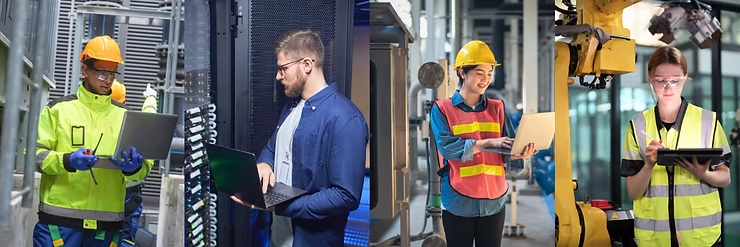
Lone worker monitoring is valuable across many industries, including:
- Field service and maintenance
- Utilities and infrastructure
- Construction and engineering
- Healthcare and community services
- Security and facility management
Any role that involves working alone can benefit from improved monitoring.
Conclusion
Lone worker safety deserves more attention than it often gets. When someone is working alone, even a small incident can become far more serious if no one knows there is a problem or help takes too long to arrive. That is why having the right support in place matters so much.
Better monitoring gives businesses clearer visibility of where their workers are, how they are doing, and when something may need immediate attention. Faster response times and stronger communication can make a real difference during emergencies, while also giving employees greater confidence during their daily work.
As more roles involve field work, remote locations, and independent tasks, relying on old-fashioned check-ins is becoming less practical. Companies that improve the way they protect lone workers are not only reducing risk, they are creating a safer, more reliable working environment for everyone involved.