

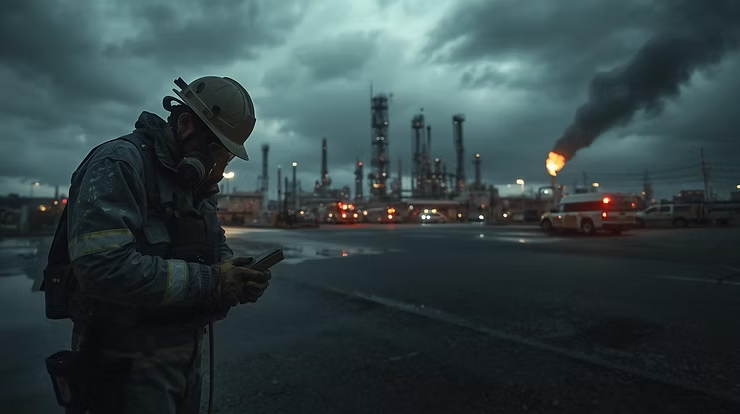
The Real Cost of Gas-Related Incidents That Never Shows Up in Reports
Gas hazards remain one of the most underestimated operational risks across industries such as oil and gas, marine, manufacturing, pharmaceuticals, utilities, and construction. When a toxic gas exposure or oxygen-deficient atmosphere incident occurs, the focus is often on immediate response and medical outcomes. What rarely gets measured is the long-term business impact.
This is where safety leaders and operational decision-makers must shift their mindset. A portable gas detector is not just a compliance tool. It is a business continuity instrument that protects productivity, reputation, and profitability.
In this article, we explore the hidden costs of gas-related incidents, why they are often underestimated, and how organisations can proactively manage gas hazard risks using leading indicators and modern detection strategies.
Why Incident Costs Are Commonly Underestimated
Most official reports capture only direct and visible costs:
- Medical treatment
- Emergency response deployment
- Equipment damage
- Confined space rescue operations
These are measurable and easy to document. However, they represent only a small fraction of the real financial impact.
What is missing from the report
The true cost of a gas incident often includes:
 |
 |
 |
 |
| Production downtime | Investigation man-hours | Administrative disruption | Loss of client confidence |
For example, a hydrogen sulfide toxic gas alarm in a process plant may not result in injury, but it can halt operations for several hours. The financial loss from downtime alone can exceed the medical costs of a minor injury.
This is why organisations that rely purely on lagging indicators fail to see the full picture.
The Hidden Operational Impact of Gas Hazards
A gas incident rarely affects only one department. It creates a ripple effect across the entire operation.

Production and workflow disruption
Common consequences include:
- Shutdowns and delayed restart procedures
- Missed maintenance schedules
- Contractor stand-down time
- Rescheduling of high-risk work
In industries that operate 24/7, even a short interruption can:
- Delay deliveries
- Breach service-level agreements
- Disrupt supply chains
Example scenario
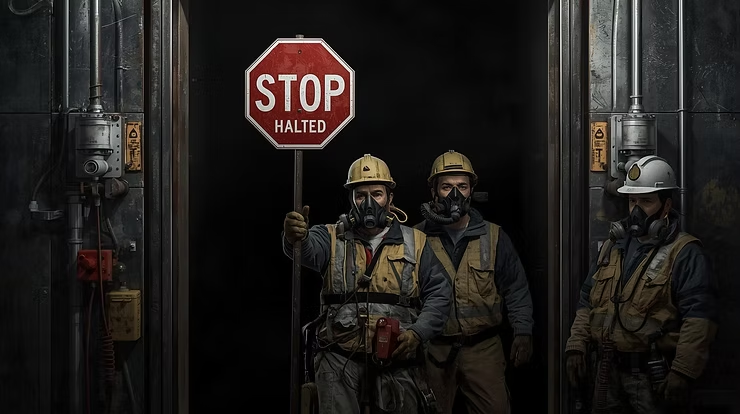
A confined space entry is stopped due to an undetected toxic gas accumulation. Even if no one is harmed:
- The job is postponed
- Additional gas testing is required
- Work permits must be reissued
- Extra safety briefings are conducted
This can consume hundreds of man-hours.
A reliable portable gas detector with real-time monitoring could have identified the atmospheric change early and prevented the disruption.
Long-Term Business Consequences That Are Often Ignored
Gas incidents do not end when the area is declared safe.
Financial and regulatory impact
Organisations may face:
- Increased insurance premiums
- Compliance audits
- Stricter regulatory oversight
- Investment in corrective safety measures
Workforce and culture impact
Less visible but equally serious effects include:
- Reduced worker confidence
- Lower productivity due to safety concerns
- Difficulty retaining skilled personnel
- Damaged internal safety culture
Brand and reputation damage
In high-risk industries, clients and stakeholders evaluate safety performance before awarding contracts.

A history of gas-related incidents can result in:
- Lost tenders
- Lower prequalification scores
- Reduced market competitiveness
Why Gas Risk Is Difficult to Quantify
Unlike mechanical failures, gas hazards are invisible and often intermittent.
Key challenges
- Near-misses are underreportedWorkers may not report brief gas alarms if no injury occurs.
- Lagging indicators dominateMany companies track only recordable incidents instead of exposure trends.
- Costs are distributed across departmentsDowntime affects operationsInvestigations affect managementAudits affect compliance teams
Because the impact is fragmented, the total cost is rarely calculated.
The Role of Portable Gas Detectors in Risk Reduction.
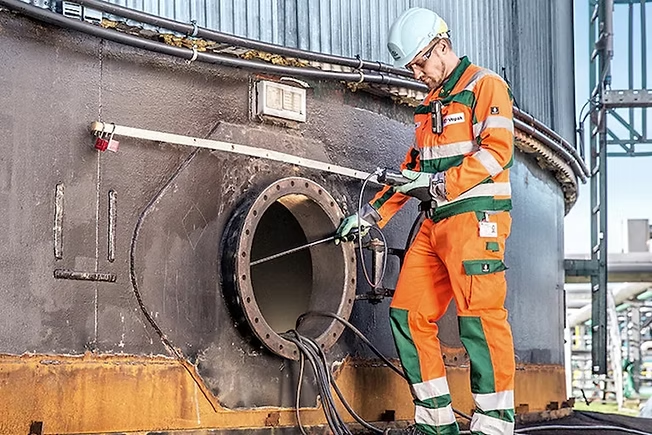
A modern portable gas detector does far more than trigger an alarm.
It enables:
- Continuous atmospheric monitoring
- Early toxic gas detection
- Data logging for exposure analysis
- Real-time decision making
Business benefits
With proper deployment, organisations can:
- Prevent unplanned shutdowns
- Reduce investigation time
- Improve permit-to-work efficiency
- Strengthen compliance documentation
This transforms gas detection from a safety expense into an operational performance tool.
The Importance of Leading Indicators in Gas Safety
High-performing organisations do not wait for incidents. They track signals that indicate rising risk.

Key leading indicators
1. Frequency of gas testing
- Are workers testing atmospheres before every entry?
- Is the portable gas detector bump-tested daily?
2. Alarm trend analysis
- How often do alarms occur?
- Are responses immediate and correct?
3. Performance during non-routine work
Most gas incidents happen during:
- Maintenance shutdowns
- Tank cleaning
- Confined space entry
- Commissioning activities
Monitoring these high-risk periods provides valuable predictive insight.
Turning Gas Hazard Management into a Business Metric
Forward-thinking companies treat gas risk as a measurable business parameter, not just a safety statistic.
What this enables
- Data-driven investment in detection technology
- Better workforce planning
- Reduced operational interruptions
- Stronger audit performance
- Higher client confidence
Practical example
By analysing gas detector data logs, a facility may discover:
- Repeated low-level toxic gas exposure in a specific area
- Increased alarm frequency during night shifts
This allows corrective action before a serious incident occurs.
Building Organisational Resilience Through Proactive Gas Detection
The real question is no longer:
“Are we compliant?”
It is:
“Are we operationally protected from gas-related disruption?”
A strategic gas detection program includes:
- Proper selection of portable gas detector for the application
- Routine calibration and bump testing
- Data-driven safety reviews
- Worker training on alarm response
This approach:
- Protects people
- Protects productivity
- Protects profitability
Conclusion: The True Value of Managing Gas Hazards
Gas-related incidents carry costs that extend far beyond medical treatment and equipment damage. They affect:
- Production continuity
- Financial performance
- Workforce morale
- Corporate reputation
By shifting from reactive reporting to proactive monitoring using portable gas detectors, organisations gain visibility into hidden risks and unlock measurable business value.
Gas safety is not just about compliance. It is about operational excellence and long-term resilience.
Need Expert Guidance on Portable Gas Detection?
Choosing the right solution for your environment is critical. Different industries face different toxic gas risks, from confined space oxygen deficiency to combustible gas exposure.
If your goal is to:
- Reduce downtime
- Strengthen compliance
- Improve safety performance
Then it is time to evaluate your current gas detection strategy.
Ansac Technology (S) Pte Ltd is ISO 9001 certified for quality management and BizSafe Star certified for workplace safety and health excellence.